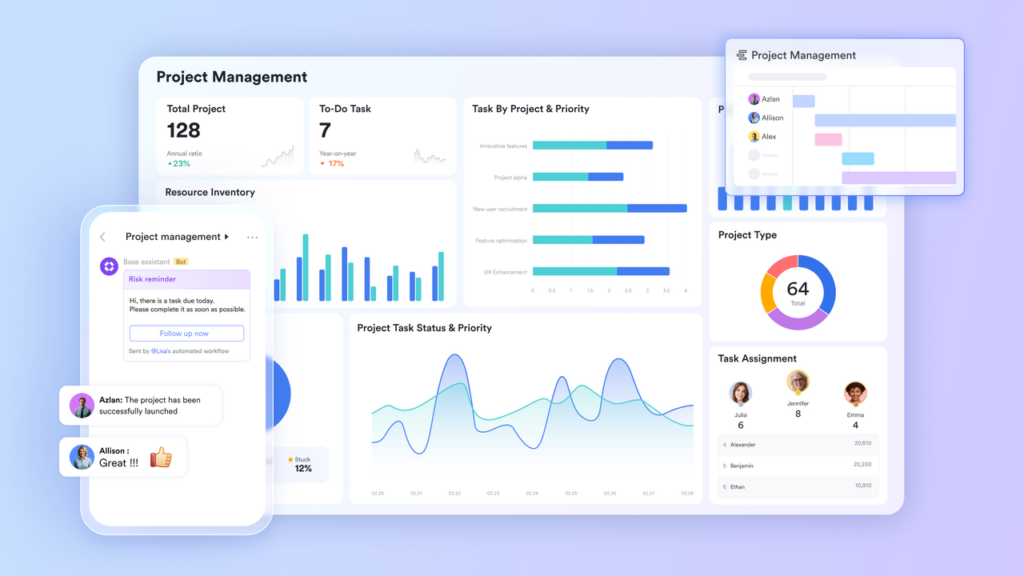
In the pursuit of organizational efficiency, many leaders fall into the trap of “digital clutter”—adopting too many specialized tools that don’t talk to each other. Lean digital management isn’t about having the most software; it’s about using modern project management tools that eliminate waste, reduce context-switching, and maximize value. By applying lean principles to your digital infrastructure, you strip away the administrative “noise” that slows down your team.
A lean operation focuses on flow and the elimination of “shadow work”—those manual tasks like data entry and status chasing that provide zero value to the end customer. To achieve this, you must move toward a synchronized environment where every tool coexists naturally. Here is how you can apply lean digital management to transform your daily operations.
Eliminating Communication Waste With Lark Messenger
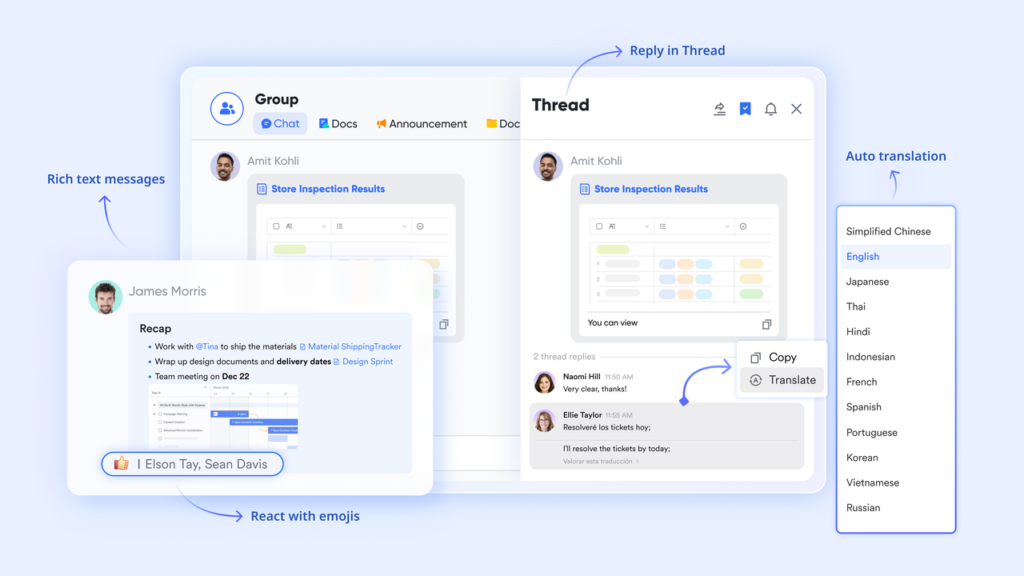
In a traditional lean environment, waste is defined as any movement that doesn’t add value. In the digital world, this translates to the constant switching between email, chat, and external apps. Lark Messenger serves as the primary engine for lean communication by condensing these flows into a single interface. By using “Pin” boards to highlight essential project goals, you ensure that team members don’t have to dig through thousands of messages to find their marching orders. The ability to use native connectors for project management tools allows status updates to flow directly into chat threads, eliminating the need for manual “update meetings.” This keeps the communication lean, high-context, and focused entirely on the task at hand.
Reducing Meeting Overproduction With Lark Minutes
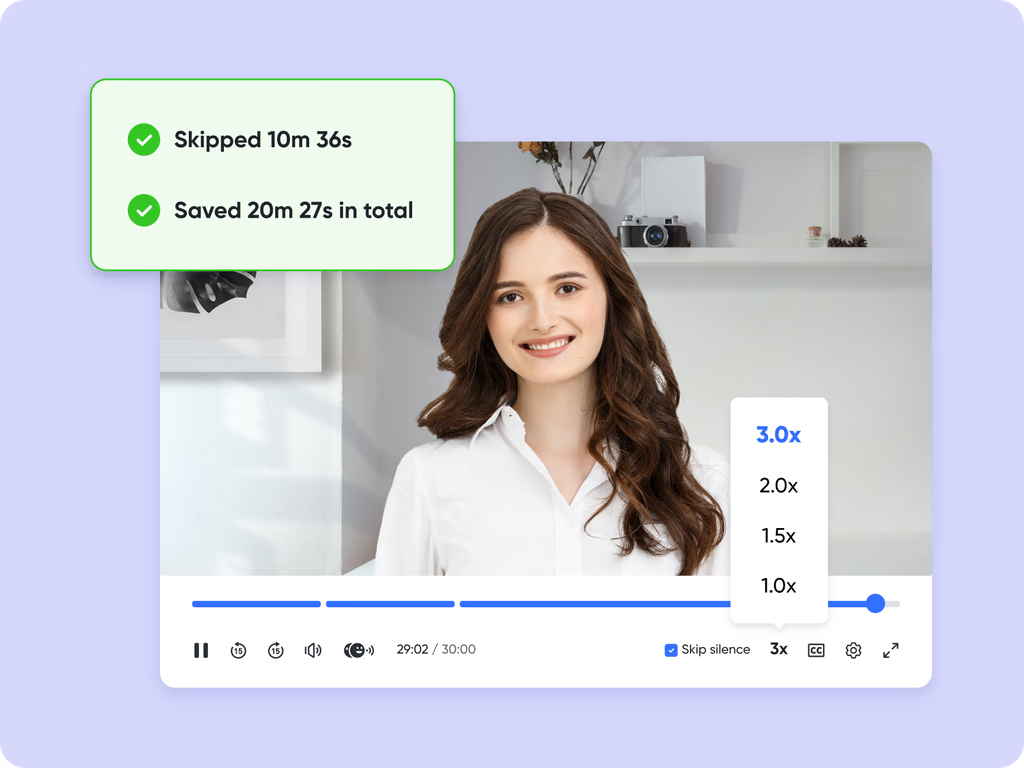
One of the greatest wastes in modern business is the overproduction of meetings that don’t result in actionable data. Lark Minutes applies lean principles to your video calls by turning every discussion into a permanent, searchable asset. Instead of requiring the whole team to attend every “sync,” the system uses AI to transcribe the call and identify key action items. Team members who aren’t essential to the live discussion can review the summary or search for their specific keywords later, allowing them to stay focused on deep work. Lean organizations find that having native transcription and archiving reduces the need for redundant meetings and the “waiting waste” that occurs when information is trapped in a non-attendant’s head.
Standardizing Knowledge Flow With Lark Wiki
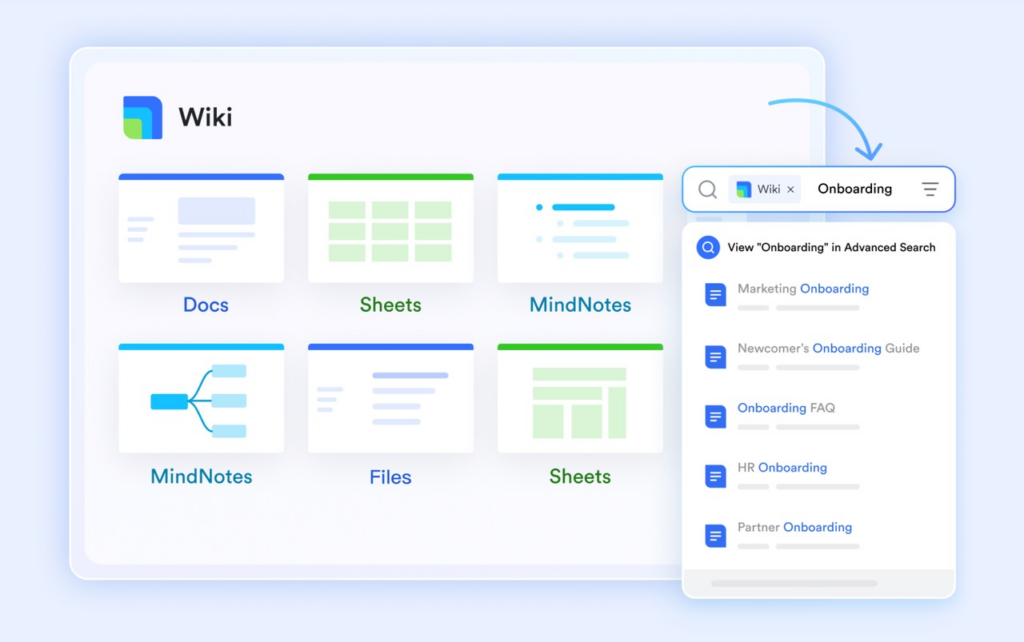
Lean management relies heavily on “Standard Work”—the best-known way to perform a task. Lark Wiki automates the distribution of these standards so that your team doesn’t waste time reinventing the wheel. By building a centralized repository for SOPs, brand guidelines, and project playbooks, you create a self-service environment that eliminates the need for repetitive internal training. Unlike static documents, these Wiki pages are live; if a process is improved at the management level, the update reflects instantly for permitted stakeholders. As one of the most effective productivity tools in the lean toolkit, the Wiki ensures that every employee has the information they need to perform at their peak without waiting for a supervisor’s clarification.
Optimizing Data Accuracy With Lark Base
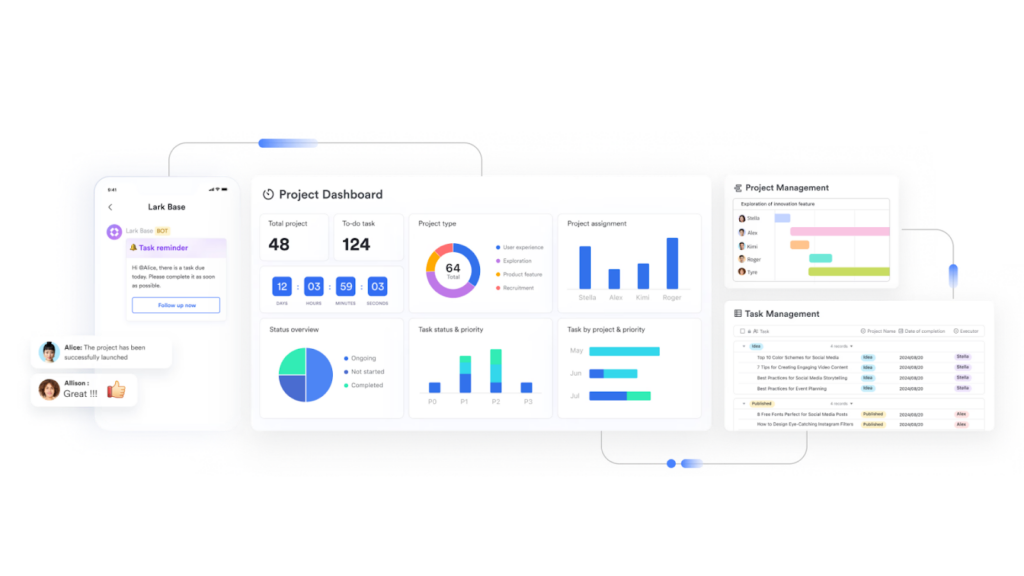
In a lean system, data errors are a significant form of waste. Lark Base provides a dynamic, relational database that ensures your operational data is accurate, accessible, and automated. By moving away from flat spreadsheets, you can create “Personalized Views” for different departments, ensuring that the warehouse team only sees inventory data while the sales team sees lead data—all pulled from the same master source. This “single source of truth” prevents data duplication and manual entry errors. Furthermore, automated triggers can be set up to notify stakeholders via Messenger the moment a record reaches a specific threshold, creating a “just-in-time” notification system that drives immediate action without human oversight.
Streamlining Resource Logistics With Lark Calendar
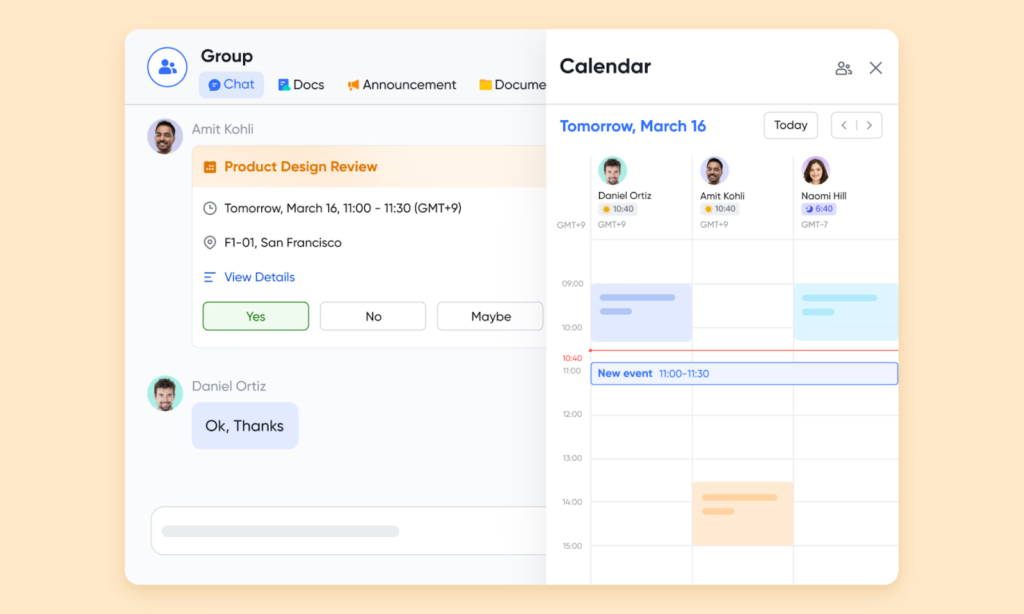
Lean management is about timing and the efficient allocation of resources. Lark Calendar synchronizes your team’s time to ensure that resources are being used where they add the most value. The “Find a Time” feature and public scheduling links remove the “scheduling waste” that usually requires dozens of back-and-forth emails. By overlaying project milestones directly onto the calendar, you can visualize the team’s workload in real-time, preventing the “bottleneck waste” that occurs when one team member is over-leveraged. The system helps because every meeting invite is linked to the relevant Wiki page or documents, and thus every minute spent in a meeting is optimized for maximum collaborative output.
Automating Intake And Routing With Lark Forms
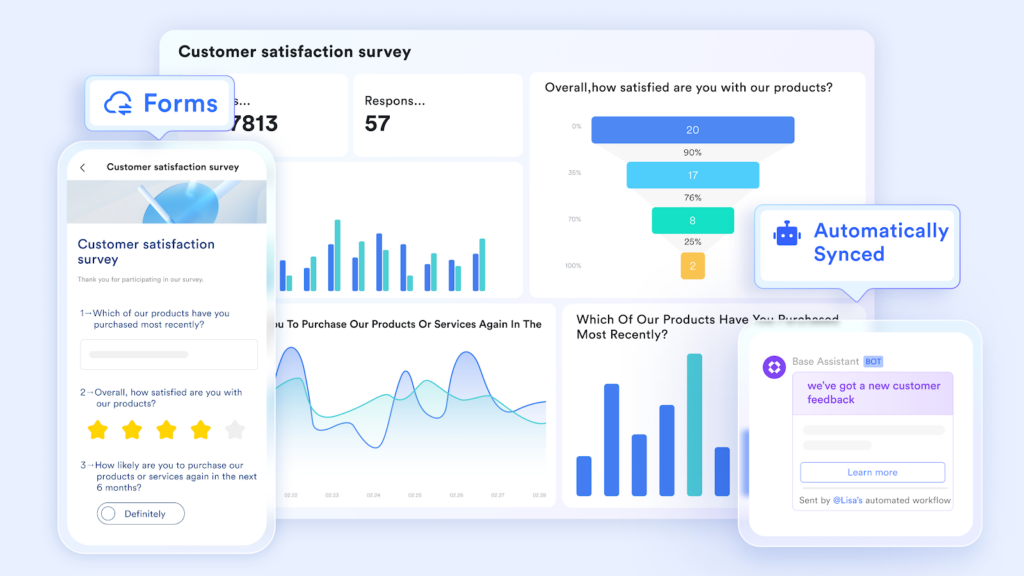
The “input” stage of any process is where the most friction occurs. Lark Forms streamlines this by providing a standardized, mobile-friendly way to collect data from clients or internal teams. Instead of receiving unstructured requests via email, you use forms that funnel data directly into your Lark Base for analysis. These submissions can trigger Lark Approval workflows, where a request for resources is automatically routed to the correct manager based on preset logic. This removes the manual “chasing” of signatures and ensures that every request follows the standardized lean process. By automating the intake and routing of data, you ensure that the process moves from “request” to “resolution” with the shortest possible lead time.
Bonus: Why Using Too Many Different Apps Is Slowing You Down
It’s a common roadmap: you look up Google Workspace pricing to get your team on professional email, but as your headcount grows, so does the “bureaucracy tax.” You quickly realize you need more than just an inbox to stay efficient. Before long, you’re layering on Slack for instant messaging, Asana to track to-do lists, and Zoom for video calls.
The problem is that these apps don’t talk to each other. Your team ends up spending a huge chunk of their day just moving information around. They might copy a client’s request from chat and paste it into a spreadsheet, or spend 10 minutes searching three different apps just to find one PDF. This is a “hidden tax” on your time. You aren’t just paying for several different monthly bills; you are paying for the hours your team loses acting as a bridge between broken tools.
Lark stops this by putting your team’s chat, tasks, and documents in one single home. When everything lives in the same spot, you don’t have to go on a “search and rescue” mission just to find an answer. You aren’t just saving money on software; you are giving your staff their time back so they can focus on the work that actually drives the company’s growth.
The Bottom Line
Lean digital management is not a destination, but a continuous effort to strip away the complexities that hinder your team’s performance. By moving your operations into a single, synchronized environment and a modern set of productivity tools, you eliminate the silos that create waste and the app-switching that destroys focus.
You aren’t just managing a digital workspace; you are building a high-velocity culture where the software handles mundane details, allowing your people to do the creative, high-value work they were hired for. When your data and your dialogue live together, the path from an idea to a finished product becomes a straight line.