Introduction
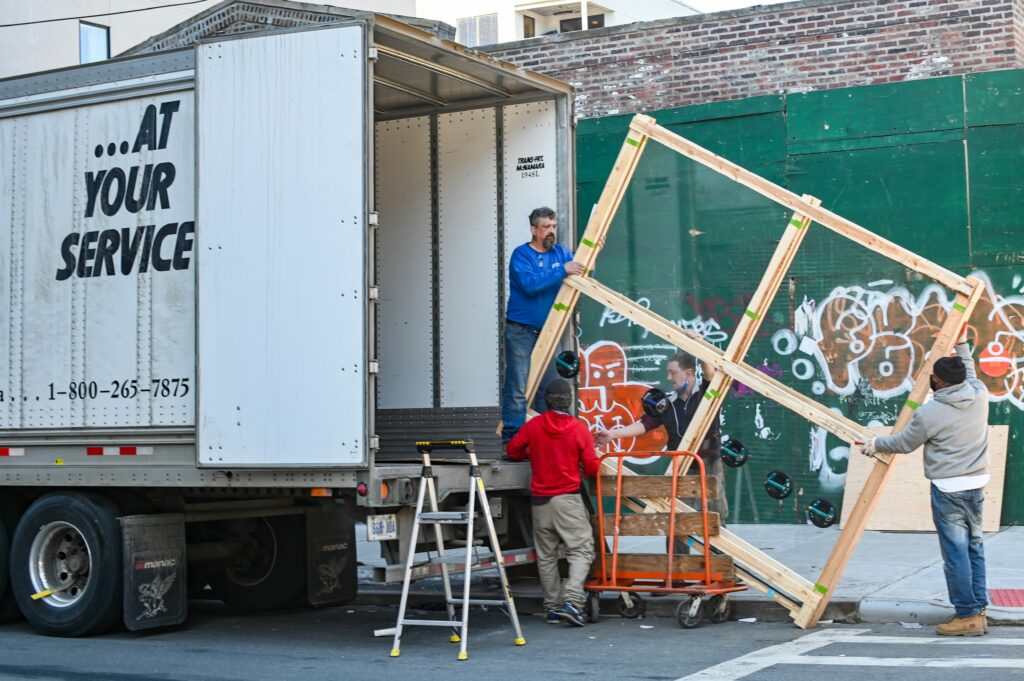
Moving labor refers to professional movers who provide physical assistance with loading, unloading, packing, and handling belongings—without providing transportation. If you’ve rented a truck or portable container and need trained crews to do the heavy lifting, labor-only moving services give you exactly that: skilled help for the physical aspects of your move while you maintain control over the transportation.
This guide covers labor-only services exclusively. It does not address truck rental, full-service moving companies that handle transportation, or long distance relocation logistics. The focus is strictly on hiring professional movers for tasks like loading your rental truck, unloading at your new home, packing boxes, and moving heavy items like furniture and appliances.
Target audience: Individuals who have already arranged their own transportation—whether a rental truck, moving container, or borrowed vehicle—and now need physical assistance to complete the moving process efficiently and safely.
Direct answer: Moving labor means hiring insured, trained crews to handle the physical work of your move without the transportation component. You get professional movers for loading, unloading, packing, or specialty item handling while you control the truck and driving.
Key benefits you’ll gain from this guide:
- Understanding how to achieve significant cost savings compared to full-service moves
- Learning injury prevention strategies through professional handling techniques
- Discovering how trained crews dramatically increase moving efficiency
- Knowing how to protect your belongings and property from damage
- Gaining flexibility to customize exactly which labor services you need
Understanding Moving Labor Services
Moving labor differs fundamentally from full-service moving in one critical aspect: transportation is excluded. With full-service moves, the company, like 904 Movers, handles everything—packing, loading, driving, unloading, and unpacking. With labor-only services, you’re responsible for the truck and driving, but professional movers handle the physical work.
What’s typically included: basic equipment like dollies, furniture pads, straps, and tools for disassembly and reassembly. What’s not included: the truck, fuel, mileage, moving supplies like boxes unless explicitly quoted, and sometimes stairs or long-carry distances trigger additional costs.
Loading and Unloading Services
Loading and unloading assistance is the most common labor-only service. Crews arrive at your location, load your belongings into your rental truck or container, then meet you at the destination to unload. For DIY movers managing their own truck rental, this service eliminates the most physically demanding and time-consuming aspect of residential moving.
Key factors affecting time include crew size, number of floors and stairs, distance between door and truck, narrow hallways, and elevator access. These services matter because experienced movers can load a truck in half the time it takes inexperienced helpers, with far less risk of damage to your furniture and belongings.
Packing and Unpacking Labor
Packing services involve crews arriving before moving day to pack your entire home or specific rooms into boxes, label everything, and wrap fragile items properly. Unpacking services reverse this process at your new home, helping you settle in faster.
This connects directly to loading efficiency: professionally packed boxes stack better, protect items more effectively, and speed up the loading process. Movers generally disclaim coverage for damage inside owner-packed boxes, so professional packing can protect your belongings and your claims if something goes wrong.
Heavy Item Moving
Specialty labor for heavy items—pianos, safes, pool tables, large appliances—requires additional manpower, specialized equipment, and specific training. Piano boards, appliance dollies, straps, and sometimes hoists are essential for these jobs.
This specialized service often costs more per hour or carries flat per-item charges. The presence of heavy items significantly increases total labor time and costs, making it worth discussing these details prior to booking. This brings us to the specific types of crews you can hire for different moving needs.
Types of Moving Labor You Can Hire
Building on these service categories, several distinct crew types exist, each with different pricing structures and specializations suited to various moving situations.
Hourly Loading Crews
Hourly crews—typically two, three, or four movers—charge per hour with minimum requirements, usually two to three hours. In 2026, typical labor-only hourly rates run approximately $120 to $180 per hour for two movers, $160 to $240 for three movers, and $200 to $300 for four movers. Time increments are usually billed in 15 or 30-minute blocks.
For smaller apartments like studios or one-bedroom units, expect three to five hours of labor costing $400 to $800. Larger houses with more rooms increase both time and costs proportionally.
Specialty Item Movers
These trained professionals focus exclusively on challenging items: pianos, antiques, safes, and major appliances. Their rates are higher because they bring specialized equipment and possess specific skills for maneuvering awkward, heavy, or delicate items through tight spaces.
A piano move might cost several hundred dollars as a flat charge depending on stairs, distance, and access. These guys often require pre-surveys to assess the job and ensure they bring proper equipment. Their expertise can mean the difference between a successful move and costly damage.
Packing-Only Services
Some crews specialize exclusively in packing or unpacking, not loading or transport. Rates are typically per packer per hour, often lower than full loading crews. Supplies may cost extra unless included in the quote.
Packing-only services benefit customers with limited time or those wanting fragile items professionally handled while they pack less delicate belongings themselves. Always verify whether packers are insured for items in boxes they pack and whether materials are included in the charge.
Understanding these service types prepares you to navigate the costs and booking process effectively.
Common Moving Labor Challenges and Solutions
Even with professional movers, challenges arise. Knowing potential issues and solutions helps you protect your move and belongings.
No-Show or Late Crews
Confirm your booking in writing and request a reminder 24 hours prior to your move date. Verify the company’s licensing and check reviews for reliability patterns. Understand the cancellation and rescheduling policies before booking, and have a backup plan ready if crews don’t arrive as scheduled.
Damage to Items or Property
Ensure movers use protective equipment—blankets, pads, straps, and floor protection. Document your belongings with photos or video before moving begins. Note any existing damage in writing. Declare high-value items and select appropriate valuation coverage. Under federal law, labor-only interstate movers must offer Released Value Protection (about $0.60 per pound per item) at no charge, with Full Value Protection available for additional cost.
Unexpected Additional Costs
Ask for itemized estimates specifying exactly what’s included. Get written confirmation of rates for potential extras: stairs, long carries, waiting time, overtime, and equipment fees. Prepare your space by clearing pathways and having items ready to load, reducing crew time and your final bill.
Conclusion and Next Steps
Moving labor services deliver significant value when you want cost control while maintaining transportation flexibility. Labor-only moves cost substantially less than full-service options—often around $450 for loading and unloading compared to over $1,100 for full-service local moves. The trade-off is coordinating your own truck rental and driving.