Luxury is often described through appearance, but its most persuasive qualities are usually felt rather than seen.
The weight of a well-made object, the resistance of natural material beneath the fingertips and the quiet familiarity that develops through repeated use can create a stronger emotional response than any visible logo.
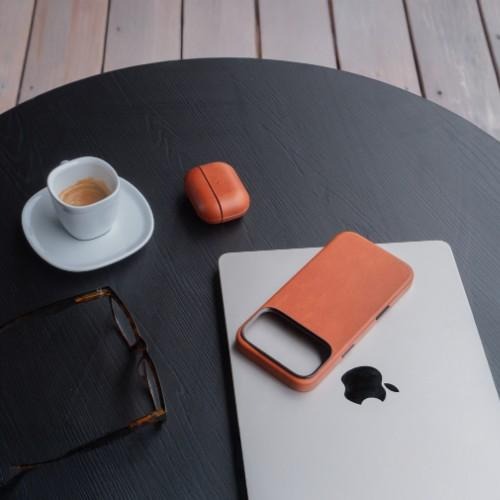
That is the appeal of RYAN London iPhone cases. By surrounding cold glass and metal with warm, tactile leather, they change the smartphone from a purely digital tool into something more personal: an object that offers a small moment of sensory pleasure every time it is picked up.
Touch Has Become Part of the Digital Experience
We handle our phones all the time, intuitively. We fish them out in the morning’s first minutes; we set them down beside us as we work, and we pick them up and look at them at night.
Since these movements are so physical, so ingrained, the feel of the phone itself gains greater import than one might imagine. A hard, plastic case can keep a device running smoothly, but it doesn’t do anything for the user. Natural leather offers warmth and texture, a unique sense of touch, and a degree of resistance.
A luxury is often something small, something that no one appreciates you having or that is neither inconvenient nor unbelievable nor necessary that elevates the mechanical to the luxurious. A hand feels this less than a computer camouflaged as one, even though the latter is “more” technologically than the former.
Leather Creates a Moment of Grounding
Life on our digital interface is fast. Pop-ups, alerts, refreshes, and conversations that never stop. Natural leather, by nature, is slow.
It has a texture that demands feeling. A quality and grain that doesn’t change at the touch of a button, that doesn’t mess with pixels, and whose smell comes from the earth and the human activity we put into it. Even a split second of feeling your leather-encased phone interrupts the sensory loop of digital sensoriness.
This is the point where your luxury leather phone case stops being an accessory. It acts as a point of contact between the physical and digital worlds.
For mindfulness advocates, that contact can be meaningful. The feel of leather beneath the palm does not remove distraction, but it can bring attention back to the object itself and to the present action: lifting the phone, feeling its weight and becoming conscious of the hand around it.
Craftsmanship Changes the Emotional Value of an Object
A mass-produced accessory is usually designed to remain anonymous. It performs its function and is replaced when the device changes. Fine leather encourages a different kind of ownership.
RYAN London works with full-grain, vegetable-tanned leather, a material valued for retaining its natural surface and developing character through use. Rather than remaining visually frozen, the leather responds to handling, light and time.
The marks that appear are not simply signs of deterioration. They record movement. The areas touched most often soften, tones deepen and the case begins to reflect the habits of its owner.
This gradual transformation gives the object emotional value. It is no longer identical to every other case from the same collection. It becomes linked to journeys, conversations, working days and private routines.
True Luxury Is Not Always Perfect
Modern technology is designed around precision. Screens are flawless, edges are exact and surfaces arrive without variation. Natural leather introduces something less controlled and therefore more human.
Its grain may shift slightly across the surface. Colour develops rather than remaining completely uniform. No two pieces age in precisely the same way.
For luxury purists, this is not a compromise. It is part of the attraction. Perfection can be impressive, but character is more intimate.
A premium leather iPhone cover allows the device to become more individual as it is used. The case does not simply preserve the phone beneath it; it creates a visible history around it.
Familiarity Becomes Its Own Form of Indulgence
For the global traveller, luxury often lies in continuity. Hotels, cities and working environments may change, but a few personal objects remain close: a watch, a wallet, a passport holder or a carefully chosen piece of luggage.
A leather-covered phone can become part of that familiar collection. Its texture is recognised immediately, whether it is picked up in an airport lounge, placed on a restaurant table or held during a call from another time zone.
That familiarity offers a quiet form of comfort. High-end smartphone lifestyle is not only about having the latest technology. It is also about making that technology feel consistent with the rest of one’s personal world.
The Luxury Is in the Repeated Experience
The emotional value of fine leather does not depend on a single dramatic moment. It is created gradually through repetition.
It is there in the warmth of the material after it has rested in the hand, the scent noticed when the phone is lifted and the changing surface that becomes more recognisable over time.
Sensory luxury tech accessories succeed when they make ordinary interactions feel more considered. They do not demand attention, yet they reward it.
In a culture of constant upgrades and disposable surfaces, a leather case offers another way of relating to technology. It suggests that even a modern digital object can become richer through time, touch and familiarity.
That may be the most convincing form of contemporary luxury: not something admired from a distance, but something quietly experienced throughout the day.