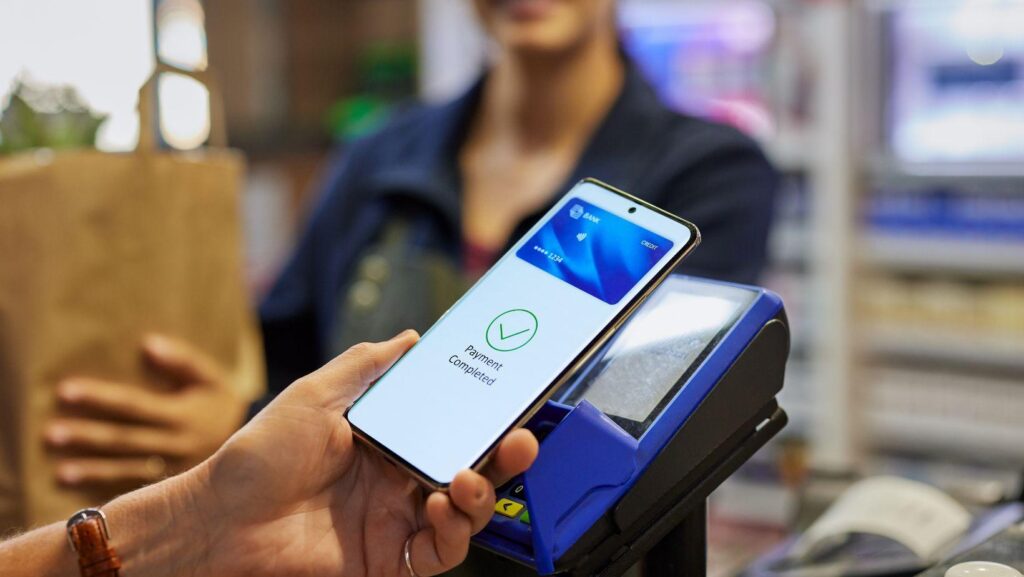
For many Canadians, Interac is less a payment brand than a reflex. You tap a debit card at a coffee shop, send a roommate money for dinner, or pay a small business through online banking. The name sits quietly in the background.
That familiarity didn’t happen overnight. Interac spent more than four decades growing alongside Canadian banking habits, and its biggest strength has been simple: it made digital money feel ordinary.
It started with a very Canadian problem
Interac traces its roots to 1984, when major Canadian financial institutions joined forces to connect their automated banking machines. Before that, a bank card was far more tied to the bank that issued it. The shared network made cash access easier across the country.
Then came debit payments. A pilot launched in 1990, and Interac Debit became a national retail habit during the decade that followed. Paying straight out of a bank account felt immediate. No cheque. No trip to an ATM.
That may sound mundane now, but mundane is exactly what successful payment infrastructure wants to become. When people stop thinking about the rails underneath a transaction, the system has won a major part of the trust battle.
Then e-Transfer changed the social side of money
The bigger cultural shift arrived in 2003 with Interac e-Transfer. Suddenly, sending money could feel closer to sending a message.
Rent splits, birthday gifts, shared restaurant bills, marketplace purchases and invoices gradually moved into banking apps Canadians were already opening. The product didn’t ask people to build a whole new financial habit. It attached itself to one they already had.
By 2025, Interac reported 1.6 billion e-Transfer transactions during the year, along with 7 billion Interac Debit transactions. The company said its payment and verification services handled more than 8.7 billion transactions in total. That’s the kind of scale that turns a useful tool into national infrastructure.
The quiet superpower is familiarity
Payment design is often discussed in technical terms: authentication, settlement, routing, APIs. All of that matters. But there’s another layer that product teams sometimes underestimate: recognition.
A familiar Interac button can reduce the small moment of hesitation that appears at checkout. People know the name, know the bank-login flow and have a rough idea of what happens next.
That effect carries into newer digital services too. Ontario Betinia, for instance, lists Interac among its supported deposit methods, showing how a payment habit built around banking and retail can travel into regulated online entertainment without asking users to learn a separate payment system.
This is one reason Interac became bigger than a debit card network. It became a piece of Canadian digital language.
And it keeps stretching beyond the card
Interac’s recent moves show that the company isn’t treating its old success as a finish line. In 2025 it launched Konek, a pay-by-bank e-commerce product, with Staples Canada as its first national merchant. It has also broadened access to e-Transfer for qualified payment service providers, with Neo Financial and KOHO joining directly as participants in 2026.
Interac has also been exploring tokenised deposits and stablecoins as possible parts of future payment infrastructure. Payments Canada is preparing the Real-Time Rail, with the first launch phase targeted for the fourth quarter of 2026 and e-Transfer clearing and settlement migration beginning in 2027.
The next chapter may look less visible than the last one. Faster settlement, digital identity tools and bank-connected commerce aren’t flashy ideas at checkout. They’re plumbing. Good plumbing, though, changes what a whole economy can build on top of it.
https://www.youtube.com/watch?v=r-s4oybrPQk
The backbone works because people barely notice it
Canada’s payment market is already heavily digital. Payments Canada reported that digital payments made up 86 percent of payment volume in 2024, while contactless accounted for 58 percent of transactions.
Interac didn’t create every part of that shift. What it did was give Canadians a dependable bridge between bank accounts and daily life, then keep extending that bridge as behaviour changed.
That’s probably the clearest explanation for its staying power. Interac became infrastructure by becoming familiar first. Once a payment method feels almost invisible, replacing it is no small job.
Online gambling in Ontario is limited to those 19 and over. ConnexOntario: 1-866-531-2600.