
In northeastern Colombia, nestled among mountains of great geological richness, lies Remedios, a municipality whose identity has been built around gold for more than four centuries.
Considered one of the oldest gold-mining districts in the country, this territory in the department of Antioquia has been the site of almost uninterrupted mining activity since the colonial period. Today, this historical legacy continues through the operations of Napoleon Gold Mine, a company that carries out gold exploration and production activities in the region.
Mining in Remedios dates back to the early 16th century, when colonizers identified the area’s high gold potential. Since then, gold has shaped the local economy, social organization, and culture of the municipality. Remedios is located approximately 195 kilometers from Medellín, the capital of Antioquia and one of the country’s main economic centers, within a gold-bearing belt that has been continuously mined for over 460 years.
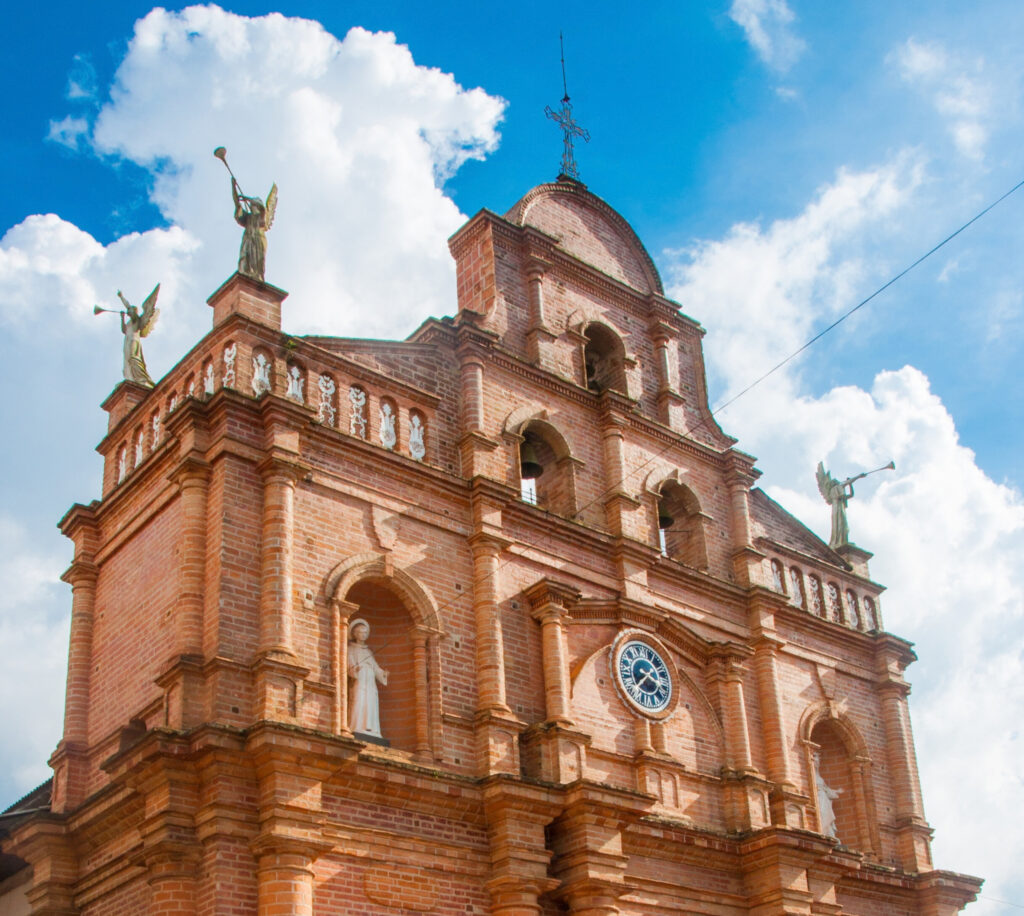
One of the most representative features of this mining district is La Veta del Cura, also known as Veta Roja, Veta de la Iglesia, or Priest’s Vein. It is one of the oldest and most important gold veins in Colombia and the world, and Napoleon Gold Mine has been operating it for over 12 years. This vein runs beneath the town of Remedios and even passes under its main church, founded in 1560, one of the oldest in the country, located less than a kilometer from the current mining area.
The significance of La Veta del Cura is not limited to its historical value. From a geological perspective, the mine is located within the Antioquia Batholith, one of the most important geological formations in Colombia. This batholith, composed of large bodies of intrusive igneous rocks, has been crucial in the formation of numerous high-grade gold deposits in the region. Its structure facilitated the circulation of mineralizing fluids, giving rise to veins with high gold content that now sustain the department’s mining activity.
Antioquia is historically the main gold-producing region in Colombia. According to official statistics from the National Mining Agency, in 2024 the department accounted for almost all of the country’s formal gold production. In the case of gold concentrates, Antioquia led with 88.8% of the national total, while in refined gold production it reached 97.5%, far surpassing other departments such as Valle del Cauca, Bolívar, and Chocó. These figures confirm the region’s central role within the Colombian mining sector.
Remedios’ mining tradition is also evident in its cultural landscape. Every year, municipalities like Remedios and Segovia celebrate the Gold Festivals, events that pay homage to generations of miners and highlight traditional activities such as mining, livestock farming, music, and popular parades.
This historical identity is even reflected in the municipality’s flag: the yellow symbolizes gold wealth, the green represents the forests and the natural environment, and the black recalls past episodes associated with the exploration of energy resources in the area.

Flag of Remedios
With documented mining activity since 1933 in its direct area of influence and a tradition dating back to 1560, Remedios remains one of the most important gold-mining regions in Colombia and the world. In this environment of high historical, cultural, and geological value, Napoleon Gold Mine carries out its operations, continuing a mining legacy that is an essential part of the history of northeastern Antioquia.
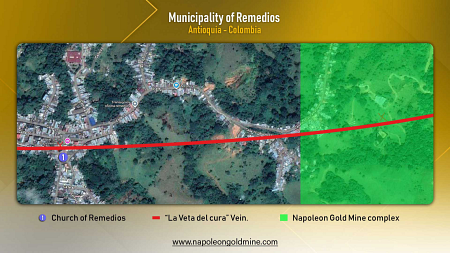
Strategic location of Napoleon Gold Mine in the municipality of Remedios, Antioquia (Colombia).