

In 2023, global carbon pricing revenues reached a record $104 billion, underscoring the scale of capital at play. For traders who need a global view for EU and UK demand data, the environment is defined by high stakes and relentless volatility. Success in these markets requires moving beyond basic price tracking to an integrated analysis of policy shifts, auction supply, and industrial hedging patterns.
Navigating this landscape requires a sophisticated understanding of complex, interlocking variables. Price swings can be extreme; EU Carbon Permits reached an all-time high of €105.73 in February 2023, only to see sharp corrections. In this environment, relying on delayed, official data is a critical liability. The true competitive advantage no longer comes from analyzing the past better, but from seeing the present more clearly. The edge lies in leveraging “smarter data”—real-time, physical intelligence that provides a true view of market fundamentals as they unfold.
Understanding the High-Stakes World of the EU/UK ETS
The EU/UK ETS operates as the world’s largest “cap-and-trade” system. It’s a market-based mechanism designed to reduce greenhouse gas emissions by setting a cap on the total amount that can be emitted by covered installations. Companies receive or buy emission allowances (EUAs/UKAs) and can trade them with one another as needed.
The core price mechanism is elegantly simple in theory but profoundly complex in practice. The European Commission states that price fluctuations are a normal feature reflecting the balance of supply and demand based on market fundamentals. This balance, however, is constantly shifting. The market’s rapid growth has only amplified its importance in global finance. According to the World Bank, carbon pricing systems now cover 24% of global emissions, a dramatic rise from just 7% a decade ago. For traders, this means that extreme price volatility is not an anomaly to be avoided but a fundamental characteristic that must be managed with superior tools and intelligence.
The Trader’s Blind Spot
Success in the ETS markets hinges on correctly anticipating the supply and demand for carbon allowances. Yet, traditional analytical methods are increasingly ill-equipped to handle the market’s speed and complexity, leaving traders exposed to significant risk. The core of the problem lies in the drivers of volatility and the data used to track them.
The Complex Drivers of Price Fluctuation
An academic analysis in the Journal of Environmental Investing found that macroeconomic volatility and energy disruptions have made EU ETS prices more sensitive to energy-related factors. This sensitivity can manifest in dramatic price swings.
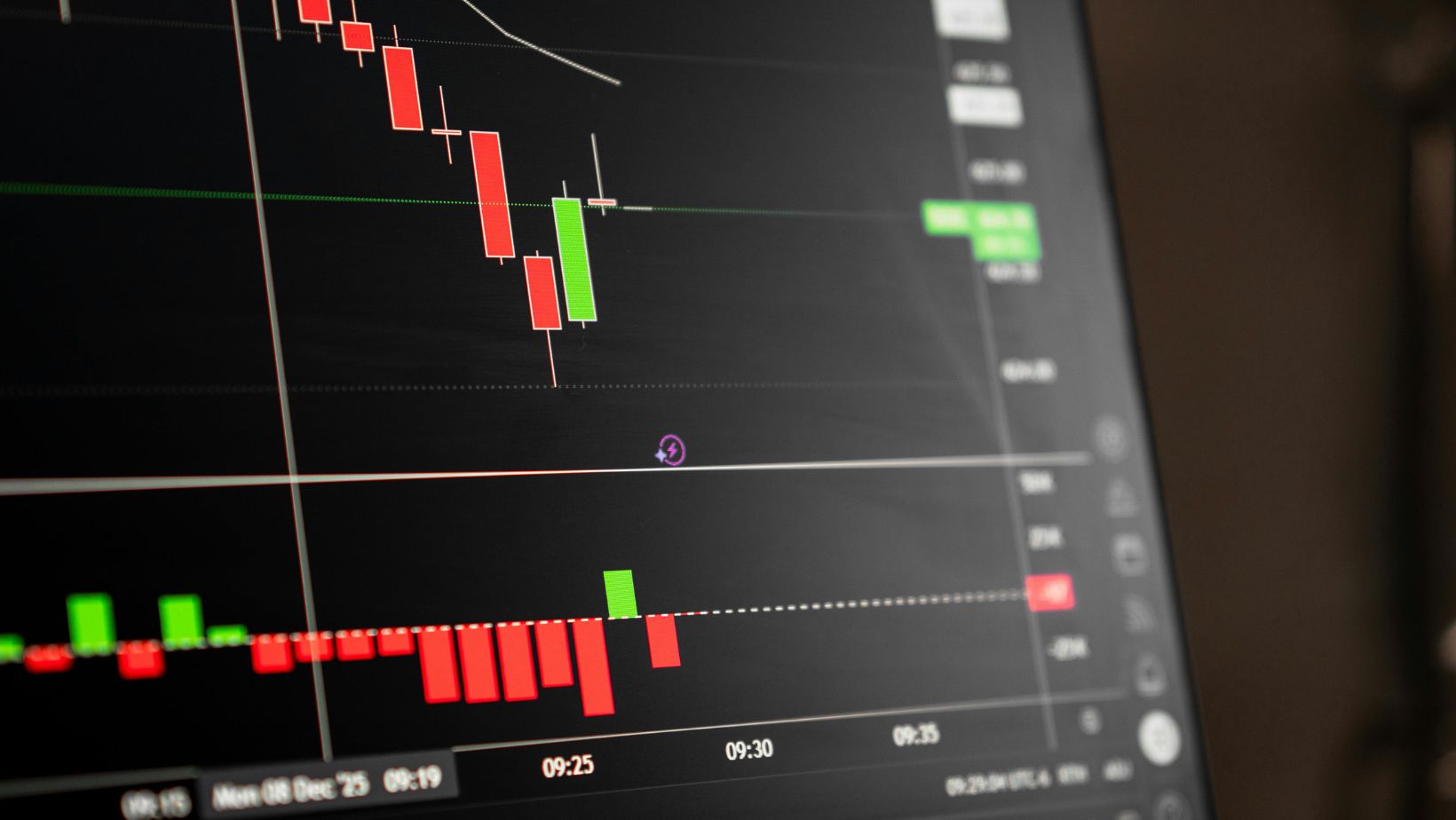
For example, during the market turmoil caused by the COVID-19 pandemic, the average intra-day price range for EUAs hit a record €1.26/t, nearly double the average of the previous month. This demonstrates how quickly external shocks can be priced into the market, punishing those who are slow to react.
The Critical Flaw of Relying on Lagging Data
While the drivers of volatility are complex, the single greatest disadvantage for most traders is the data they use. Official emissions data from governments and regulatory agencies—the primary source for understanding allowance demand—is released with a significant time lag. This information is often months or even a year old, making it a historical record rather than a predictive tool.
Predictive Edge with Smarter Data
The answer to the data lag problem is not to analyze historical reports faster; it’s to bypass them entirely. This is where “smarter data” creates a new paradigm for ETS trading. In this context, smarter data is a multi-source approach that uses satellite imagery, geospatial data, and artificial intelligence to measure physical, real-world industrial activity in near real-time.
Instead of waiting for a government report to confirm that a country’s power sector increased its emissions last quarter, this approach allows you to see the smoke from the stacks and measure the heat signatures from the plants, week by week. It directly observes the emissions-generating activities as they happen, providing a direct read on the demand for carbon allowances.
Traders looking to outpace the market can leverage carbon tracking software to convert these raw geospatial signals into a high-fidelity map of EUA and UKA demand. By isolating daily activity within high-impact sectors, you can verify total market balance with nearly 98% precision against official benchmarks. This shift toward live, asset-level monitoring ensures your trading strategies are informed by current industrial output rather than outdated public estimates, giving you the clarity needed to act on price volatility before the rest of the market catches up to the data.
Traditional vs. Smarter Data
The difference between the conventional approach and a strategy powered by smarter data is stark. It represents a shift from a level playing field of common knowledge to an arena where proprietary insight creates a distinct advantage.
| Attribute | Traditional Data Approach | Smarter Data Approach |
|---|---|---|
| Source | Official reports (governments, agencies) | Satellite imagery, AI, geospatial data |
| Timeliness | Lagging (months, quarterly, annually) | Near real-time (daily, weekly) |
| Nature | Reactive (a historical record) | Predictive (a leading indicator) |
| Granularity | Aggregated (country/sector level) | Granular (asset-level, facility-specific) |
| Resulting Edge | Common knowledge, priced into the market | Proprietary insight, potential for alpha |
Conclusion: Seizing Opportunity in a More Transparent Market
In the increasingly complex and volatile EU/UK ETS markets, the nature of the competitive edge has evolved. The advantage no longer comes from simply analyzing the past better than everyone else; it comes from seeing the present more clearly.
The fundamental challenge for every carbon trader is the critical information gap created by lagging official data. This blind spot obscures real-time demand and introduces significant uncertainty and risk. “Smarter data” solves this problem directly by leveraging advanced technology to create a transparent, real-time view of the physical world.
By measuring industrial activity and emissions as they happen, traders can move from a reactive posture to a predictive one. Leveraging this real-time physical data is rapidly becoming the new standard for sophisticated traders and quantitative analysts looking to effectively manage risk, improve forecast accuracy, and seize opportunities in a market that waits for no one.