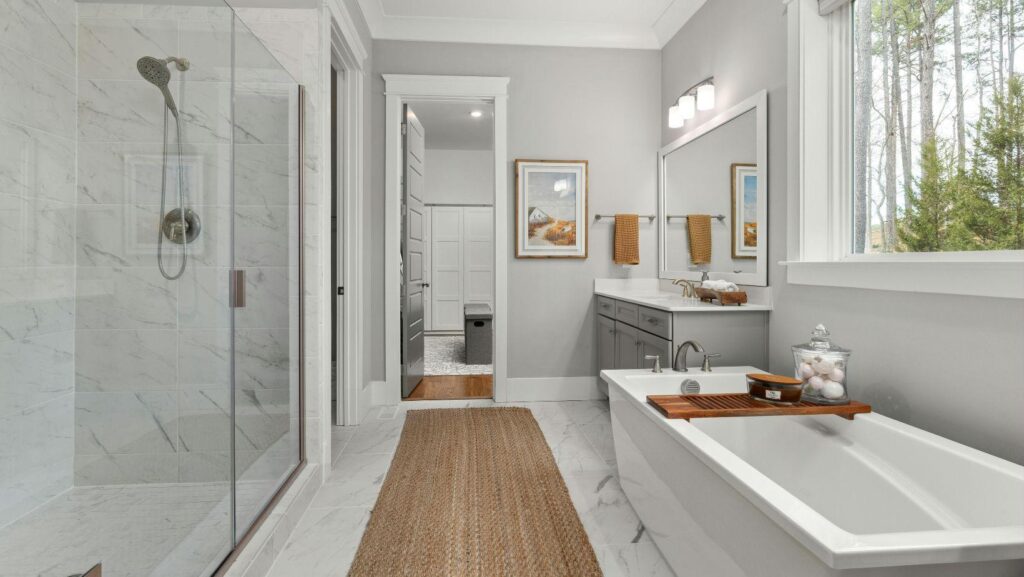
1. A Better Bathroom Starts With How You Use It
Bathrooms are often renovated with appearance in mind first. New tiles, modern fixtures, and updated colors can completely change how the room looks.
But the improvements people appreciate most are often the ones that make everyday routines easier.
A shower that is easier to enter, storage that keeps the counter clear, better lighting around the mirror, or a layout with more room to move can make a noticeable difference every morning.
For bathrooms that need more than a few cosmetic updates, exploring professional bathroom remodeling services can help homeowners consider the room as a complete space, including its layout, fixtures, storage, lighting, and other practical details.
The goal is not simply to create a newer bathroom. It is to create one that works better.
2. Make the Shower Easier to Use
The shower is one of the most frequently used features in a bathroom, so small design decisions can have a large impact.
Enough room to move comfortably matters, but so does where controls are positioned, whether toiletries have a convenient place, and how easy the surfaces are to clean.
Walk-in showers have also become popular because they can create a more open feeling, particularly when bulky barriers are removed.
However, bigger is not automatically better. A well-planned shower should fit the available room without making the rest of the bathroom feel crowded.
3. Give Everything Somewhere to Go
Bathroom clutter usually has a simple cause: there is nowhere convenient to put things.
Toiletries, towels, cleaning supplies, hair tools, and everyday products quickly fill counters when storage is limited.
Before adding cabinets simply because space is available, think about what actually needs to be stored. Useful options can include:
- Vanity drawers for frequently used products
- Recessed shower storage for bottles
- Tall cabinets where floor space is limited
- Shelving for towels and everyday items
- Hidden storage for cleaning supplies
Storage works best when the things used most often are also the easiest to reach.
4. Lighting Changes More Than the Mood
A bathroom needs different lighting at different times.
Bright, even lighting around a mirror makes morning routines easier, while softer lighting can make the room more relaxing later in the day.
Relying on a single ceiling fixture can create shadows exactly where good visibility is needed most.
Instead, consider lighting in layers. General lighting can illuminate the room, while additional fixtures around the vanity provide more focused light.
Natural light can help too, provided privacy is considered as part of the design.
5. Ventilation Is Easy to Forget
Ventilation may not be the most exciting part of a bathroom upgrade, but it plays an important role.
Bathrooms regularly deal with steam and moisture. Without sufficient airflow, that moisture can remain on mirrors, walls, ceilings, and other surfaces long after the shower is finished.
A properly planned ventilation system helps move humid air out of the room and can make the bathroom more comfortable.
It is one of those improvements that may barely be noticed when it works well but becomes very noticeable when it does not.
6. Choose Surfaces for Real Life
Bathroom materials need to handle water, humidity, cleaning products, and frequent use.
That means appearance should not be the only consideration.
Flooring should provide suitable traction when wet. Countertops need to tolerate everyday spills and cleaning. Shower surfaces should be practical to maintain, particularly in areas exposed to water every day.
It is worth thinking about how much maintenance a material requires before choosing it.
Something that looks impressive in a showroom may become less appealing if keeping it that way requires constant attention.
7. Think About the Future
A bathroom renovation can last for many years, while the people using the room may change considerably during that time.
Features that improve accessibility do not have to make a bathroom look clinical. Wider shower entrances, comfortable layouts, good lighting, and fewer unnecessary obstacles can be useful for people of different ages.
Even small decisions can make the room easier to adapt later.
Planning for the future does not mean trying to predict every possible need. It simply means avoiding design choices that make the bathroom unnecessarily difficult to use.
8. Small Details Can Have the Biggest Impact
Not every useful bathroom upgrade needs to be dramatic.
Moving an outlet closer to where it is actually needed, adding a better place for towels, improving lighting around the mirror, or creating storage inside the shower may not completely transform how the room looks.
But these are exactly the details people interact with every day.
A bathroom is one of the most practical rooms in a home. It has to handle rushed mornings, evening routines, guests, cleaning, moisture, and constant use.
That is why good bathroom design goes beyond creating something attractive.
The best upgrades are often the ones you eventually stop noticing because they simply make everything easier.