
The worldwide financial technological environment has been transformed radically. By 2026, the micro-investing platforms business will have already shot to a $4.2-billion valuation, and macroeconomic simulations show a vicious upward trend that will see the business reach $8.1 billion by 2033. This rapid expansion can be in part attributed to structural innovations such as the zero-commission brokerage model and fractional share trading. Nonetheless, the actual driving force behind the mass adoption of the Millennials and the Generation Z is inherently psychological.
Contemporary financial apps have discarded the sterile and utility-based digital ledgers in favor of very entertaining experience-based ecosystems. In a bid to pursue new recordings of daily active user (DAU) metrics and reduce the costs of customer acquisition (CAC), the current fintech apps have systematically adopted behavioral mechanics that were initially designed to work in the casino and video game businesses. These platforms are radically transforming consumer interaction with the capital by directly imitating the visual, auditory, and psychological signals of online slots and digital loot boxes.
Whereas supporters note that this gamification is democratizing the world of finance by surmounting financial inertia, a growing number of behavioral economists are raising the alarm of an exploding micro-gambling culture. This oppositism poses one of the most complicated behavioral scenarios of the decade: the neurochemical effects previously caused by the casino floor are now habitually evoked in the daily banking contacts.
The Rise of “Dopamine Banking” and Behavioral Economics
The behavioral economics approach to strategic integration of game mechanics into financial products owes a considerable amount of its origins to the observation that human decision-making processes are highly irrational and emotionally motivated. The classical financial instruments were based on the notion that the user is a rational actor, and it offers an opportunity to have access to raw data and line graphs, and this person should make the best long-term decisions. The 2026 fintech outlook, nevertheless, proactively circumvents cognitive friction, as the human brain is willing to focus on the instant emotional gratification rather than abstract future returns.
The key to this change is the appearance of the so-called Dopamine Banking. This inclusive design philosophy makes digital financial interactions into staged experiences of neurological pleasure. Dopamine Banking directly activates the reward circuitry in the brain with a powerful neurochemical mixture that makes people feel motivated with dopamine, levelled with serotonin, associated with oxytocin and endorphins, which are the brain chemicals that induce a general well-being.
Fintech creators take advantage of such cognitive biases as mental accounting and loss aversion. As an example, applications that use a round-up system will automatically invest the remaining change in daily purchases. Since these fractional values are insignificant to the brain in the process of the transaction, the user avoids the psychological pain that is normally experienced when large amounts of money are moved into a savings account. Placing the concept of budgeting into the form of interactive quests, platforms effectively beat the natural financial procrastination.
Traditional vs. Dopamine Banking User Experience
| Design Element | Traditional Banking UX | “Dopamine Banking” UX (2026) | Primary Psychological Driver |
| Color Palette | Muted, institutional blues and grays | High-contrast, vibrant, neon accents | Emotional stimulation; optimism |
| Feedback Mechanism | Static text confirmation | Confetti, haptics, cross-modal cues | Instant gratification; reinforcement |
| Reward Structure | Fixed, predictable APY | Variable, randomized “loot boxes” | Dopamine generation via uncertainty |
| Goal Tracking | Standard ledger and balance | Interactive progress bars, level-ups | Sense of mastery and achievement |
The Anatomy of Micro-Gambling: Variable Rewards and Loot Boxes
A variable reward schedule is the main engine of Dopamine banking. A variable reward schedule is based on the principles of operant conditioning and provides positive reinforcement at random periods of time, forming a very addictive psychological cycle.
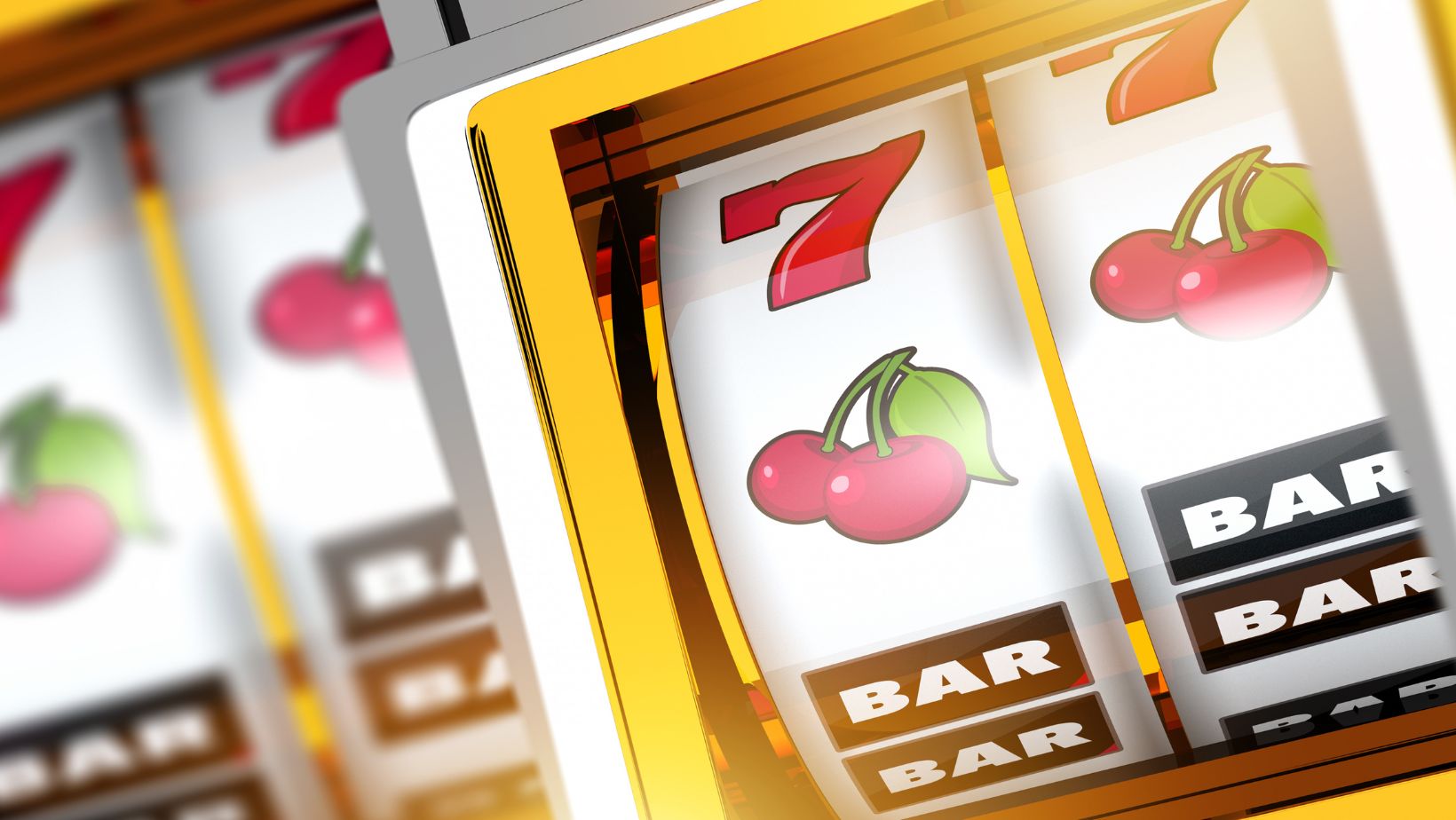
In a conventional setup, a deposit of 50 USD would give a certain amount of interest. Depositing in a gamified micro-investing app, depositing $50 can give a digital loot box, with a random chance of containing a cash prize, a free fractional share of a premium share, or an exclusive profile badge. The behavioral trigger is the psychological ambiguity right before the revelation, the true reflection of the jarring anticipation of playing online slots. This trick brainwashes the user to equate the banal saving with the adrenal rush of risking their money.
Randomized Rewards in Fintech
In 2026, the gamification software market of $36.46 billion will provide financial institutions with advanced APIs to combine randomized Pick & Win mechanics. Each time a user passes a loot box onboarding, makes a deposit, or reaches a milestone, he or she is given a digital loot box. According to platform integrators, these randomized mechanisms can cause a 40 percent growth in monthly deposits and 2 times the gross engagement revenue.
Nonetheless, critics state that it is making the younger demographics programmed to equate financial management with speculative risk, which mixes an engaging advertising tool with an unbridled lottery.
Spin-to-Win and Prize-Linked Savings Accounts (PLSAs)
The most literal translation of casino interfaces into financial technology is the so-called spin-to-win mechanic. An example of a platform that has introduced the Saving Meets Slot Machines model is the Prize-Linked Savings Accounts (PLSA), which is a program turning the money deposited by users into a chance to play a game of chance. One could also earn virtual lottery tickets by saving every $25 and joining them in the games, which could win huge jackpots.
Although the deposit is FDIC-insured, the psychological involvement is practically the same as that of gambling. The user sees the application as an everyday entertainment portal instead of a safe vault of compounding. Also, there have been complaints of throttled game odds and mathematical factuality of such prize pools, where the real expected payoff is typically well below that of a typical high-yield savings account.
The Psychology of the Near-Miss Effect
One of the most important, indeed, the most advanced elements of this imitation is the calculated algorithmic use of the near-miss effect. In behavioral psychology, a near-miss takes place when an outcome is close to a win, but it fails. Although it is a pure financial loss, the near-miss activates the reward systems of the brain in almost the same way a real victory does.
The near-miss effect exploits the illusion of control (fooling users into thinking that skill affects random results) and the availability heuristic (leaving users with an overestimation of the odds in future wins since victory was imminent). Empirical research on the subject of online slots has shown conclusively that near-misses indeed have a tremendous bearing on the behavior of users, resulting in an instant heart rate slowing down, accompanied by an instant physiological arousal. When there is a near-miss, participants greatly increase the size of their next bets and speed of playing.
By the year 2026, this cognitive distortion has been reverse-engineered by fintech developers. Using a virtual wheel to set off a bonus stock, the User Interface animation may inadvertently pass slowly over an extremely attractive blue-chip stock and land on an undesirable fractional share. Emotional arousal is, in turn, provoked by the frustration, which is instantly exploited by the app that asks the user to deposit $50 more to spin again.
UX and UI Architecture: Designing for Compulsion
The shift to gamified interfaces has to be carefully designed on User Experience (UX) and User Interface (UI). The contemporary fintech exploits the cross-modal perception, which involves visual, audio, and tactile stimuli, to enhance the pleasure and memory encoding.
Movement and animation are essential. The transfers of money are shown with flowing lines of vectors, and the increasing geometric forms depict the compound interest. The milestones are celebrated with digital confetti. The weaponization of auditory feedback is also employed. The designers further developed a latency delay of less than 50 milliseconds between the act of pressing a physical button and the associated auditory/visual response. This unnoticeable delay makes the brain perceive the physical action and the digital reward as one moment of time.
The Paradox of Calm vs. Dopamine Design
There is a special design tension, the trade-off between high-engagement dopamine stimulation and the psychological safety needed to trust in a financial relationship. Dopamine Banking is integrated into premier platforms with Calm Design, which minimizes mental load by white space and silence of confidence during automated actions that involve taking a trade. After the action has been performed, the application comes back to dopamine-mediated visual rewards smoothly. This generates an emotional roll of trustful consideration and subsequent joy.
The Global Ecosystem: Asia-Pacific’s “Play-to-Save” Revolution
As Western markets question PLSAs, the Asia-Pacific (APAC) is the most contested place of deep structural fintech gamification. Asian super-apps have smashed mobile banking, e-commerce, and social media as a result of mobile-first home habits.
Southeast Asian apps transform them into cultural traditions that are gamified as opposed to generic badges to surmount digital literacy barriers. Zalopay (Vietnam) produced an interactive game called Li Xi Rain that uses the concept of traditional lucky red envelopes, which stimulated the growth of viral transactions. The United Overseas Bank (UOB) of Singapore introduced a 3D-simulated city-building game that visually grows as a customer amasses more deposits in their savings account, growing monthly active customer numbers by half.
In Asia, gamification is evolving and no longer remains a promotional gimmick, but is changing to AI-operational models. High-tech AI compares personal spending profiles and location data to change the in-app saving challenge difficulty dynamically and adjust the odds of a virtual loot box being opened on an extraordinarily fine scale.
The Dual-Edged Sword: Wealth Accumulation vs. Compulsive Risk
The central controversy of gamifying finance is whether or not the simulation of casino features is harming or enriching the house-level wealth in the long-term. The 2026 figures are a two-sided realisation.
Positive Nudging
Advocates claim that gamification is effective in fighting against financial procrastination. Applications that use more nuanced, consistent gamification (such as progress bars and automatic round-ups) support saving habits without the need to engage with them very cognitively. When gamification is related to education, the earning of badges after going through financial literacy modules reduces overdrafts and contributes to more regular savings. In this case, the release of dopamine is associated with the accomplishment of financial stability.
Exploitative Monetization
On the other hand, the effect of gamification plus changing reward schedules and trading interfaces with higher frequency rates is catastrophic. The virtual interaction culture elevates the trading volumes and risk of the portfolio, especially for vulnerable youth consumers.
Investing in the form of a game, users are likely to chase ultimate drops instead of attending to the analysis of the basic assets. It is especially hazardous in platforms with a monetization structure of Payment for Order Flow (PFOF), where the financial incentive of the app is to optimize the volume of user trading, which is directly against the best interest of the user to trade at a low fee using a buy-and-hold strategy. Moreover, the state of cognitive fatigue caused by constantly activating the prompts of gamification puts users at high risk of advanced social engineering and APP fraud.
Navigating the Regulatory Labyrinth in 2026
The convergence of finance and video game mechanics has outpaced legacy frameworks, resulting in a fragmented global regulatory response.
- The United States: The environment is very decentralized. In 2025, the SEC abandoned any efforts to regulate predictive analytics and gamified designs after being opposed by the industry. Monitoring is based on ex post state-level enforcement (such as the settlement of Massachusetts with Robinhood in digital confetti) and the broader cybersecurity interests of FINRA.
- The European Union: The EU has taken an ex-ante proactive stance. The Retail Investment Strategy (RIS) is a strategy that specifically aims at interface designs that interfere with the decision-making of investors. Vitally, the EU has outright prohibited Payment for Order Flow (PFOF) beginning in 2026, eliminating the structural impetus of brokers to drive to excess trading.
- Asia-Pacific: Regulators such as the Hong Kong Monetary Authority (HKMA) and the Monetary Authority of Singapore (MAS) trade off innovation against protection. MAS has already implemented strict guidelines on digital advertisement to counter the misleading gamified marketing by the so-called finfluencers, and the HKMA actively applies the use of advanced AI to track the behavioral deviations of gamification.