For a long time, money lived in two separate buckets. One bucket was for making more money, your investments, your portfolio, the stuff your advisor talked about. The other bucket was for doing good, your donations, your charitable gifts, the checks you wrote and never expected back. The two rarely touched. You earned in one, and you gave in the other, and that was just how it worked.
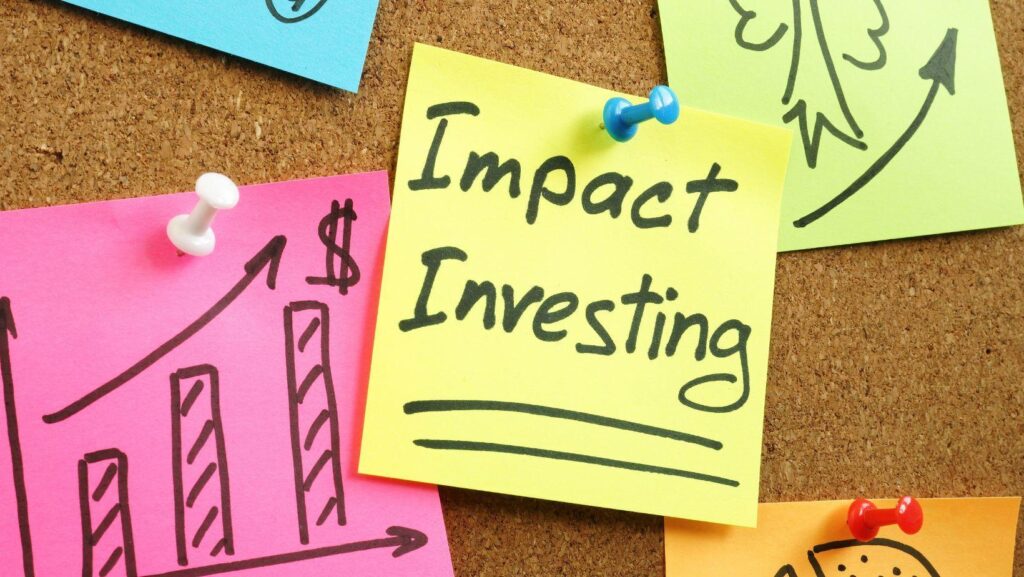
Impact investing tears down the wall between those buckets. The idea is simple, even if the execution gets technical: put your money into things that generate a financial return and create a measurable positive effect on the world at the same time. You are not choosing between profit and purpose. You are asking both of them for the same dollar.
That shift matters a lot if you give through a private foundation or a donor-advised fund, because both vehicles typically hold assets that sit in a standard portfolio between gifts. Impact investing asks a pointed question: why should that money stay neutral while it waits?
The Basic Idea
Impact investing means investing capital in companies, funds, or projects with the intent to generate social or environmental benefits alongside a financial return. The keyword is intent. You are not stumbling into a good outcome by accident. You are choosing the investment specifically because of what it does in the world, and you expect to track whether it actually delivers.
That last part, the tracking, is what separates impact investing from simply feeling good about where your money goes. Real impact investing measures results. How many people have access to clean water? How many affordable housing units got built? How much carbon is kept out of the air? The returns can range from below-market to fully competitive, depending on what the investor is willing to accept, but the measurement is non-negotiable.
It helps to see how it differs from neighboring ideas:
- Traditional investing looks only at financial return and treats impact as irrelevant
- Socially responsible investing mostly screens out the bad, avoiding tobacco, weapons, or fossil fuels
- ESG investing weighs environmental, social, and governance factors as part of managing risk
- Impact investing goes further, actively seeking out investments that create measurable good
So impact investing is the most intentional of the bunch. It is not just avoiding harm. It is chasing benefit on purpose and keeping score.
Why This Connects to Foundations and Donor-Advised Funds
Here is the part that a lot of donors miss. A private foundation or a donor-advised fund is not only a grant-making tool. It is also a pool of invested money. Between the moment you fund it and the moment a grant goes out, those assets are invested somewhere, and traditionally, that somewhere has nothing to do with your charitable mission.
Picture a foundation devoted to environmental causes whose endowment is quietly invested in companies driving the exact problems it funds grants to fix. That contradiction is more common than people realize, and once you see it, it is hard to unsee. Impact investing offers a way to close that gap so the whole pool of money points in the same direction.
Inside a Private Foundation
A private foundation has to pay out a minimum each year, generally around five percent of its assets. That leaves roughly ninety-five percent invested and working in the background. Impact investing lets a foundation put that larger share to work in line with its values rather than parking it in a generic portfolio.
There is even a specific tool for this. Foundations can make what are called program-related investments, where money goes into a project that advances the charitable mission and may also count toward the annual payout requirement. Think of a low-interest loan to a nonprofit housing developer or an investment in a social enterprise. The capital often comes back, meaning it can be recycled into the next project rather than spent once and gone.
Inside a Donor Advised Fund
Donor-advised funds work a little differently, but the logic holds. You contribute, take the tax deduction in that year, and then recommend grants over time. While you wait, the money is invested. A growing number of sponsors now let donors steer those assets into impact-focused portfolios, so the dollars are doing something useful even before they leave the fund as grants.
For donors who like the simplicity of a donor-advised fund but still want their values reflected everywhere, this is a meaningful upgrade. Your giving and your invested charitable capital finally tell the same story.
What It Looks Like in Practice
Impact investing is not one narrow thing. It spans a wide range of causes and structures, which is part of why it has caught on:
- Affordable housing projects that house people and pay returns to investors
- Clean energy ventures that cut emissions while generating revenue
- Small business loans in underserved communities that build local economies
- Funds backing companies with strong labor and environmental practices
- Social enterprises tackling education, health, or food access as their core business
A foundation or fund might place a slice of its assets across several of these, building a portfolio that earns a return and advances its mission at once. The blend is up to the donor, and that flexibility is exactly the appeal.
The Honest Tradeoffs
None of this is magic, and it is worth being clear-eyed. Some impact investments return less than a conventional portfolio would, and a donor has to decide whether the social benefit is worth that gap. Measuring impact is genuinely hard, and not every fund that markets itself as high-impact actually delivers. There is real homework involved in separating substance from spin.
There is also a learning curve. Structuring a program-related investment correctly, vetting an impact fund, or aligning a foundation’s whole endowment with its mission takes expertise that most families do not have sitting around the kitchen table. This is precisely where professional guidance earns its keep. The firms that administer foundations and donor-advised funds increasingly help donors think through these choices, handle the compliance, and keep the measurement honest, so the strategy holds up over time rather than collapsing into good intentions.
Putting It Together
Impact investing is, at its heart, a refusal to keep money and meaning in separate rooms. For someone giving through a private foundation or a donor-advised fund, it answers a question that should have nagged at us all along: why should the bulk of charitable capital sit on the sidelines, invested in who knows what? At the same time, does only the small annual payout do any good?
Aligning the invested assets with the mission lets every dollar pull in the same direction. The grants still go out. The returns still come in. But now the money in between is working too. Done thoughtfully, with the help of a management company like Crewe Foundation Services, impact investing turns a foundation or fund from a giving account into something closer to a full expression of what you actually care about.
Learn more about impact investing and whether a private foundation or donor-advised fund is right for you by visiting crewefoundationservices.com.